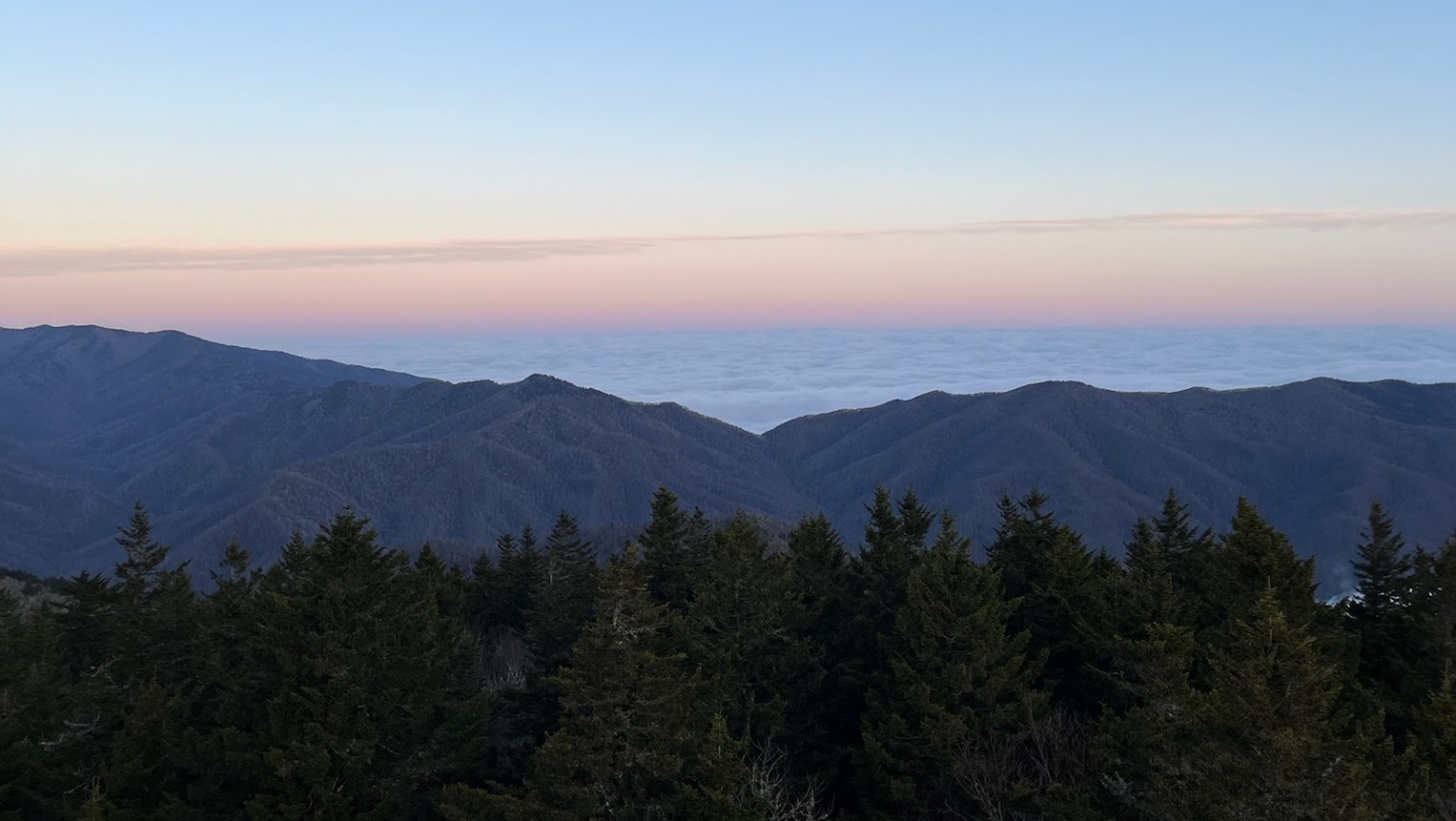
Great Smoky Mountains National Park
By Leila Paltrowitz
April 30, 2026
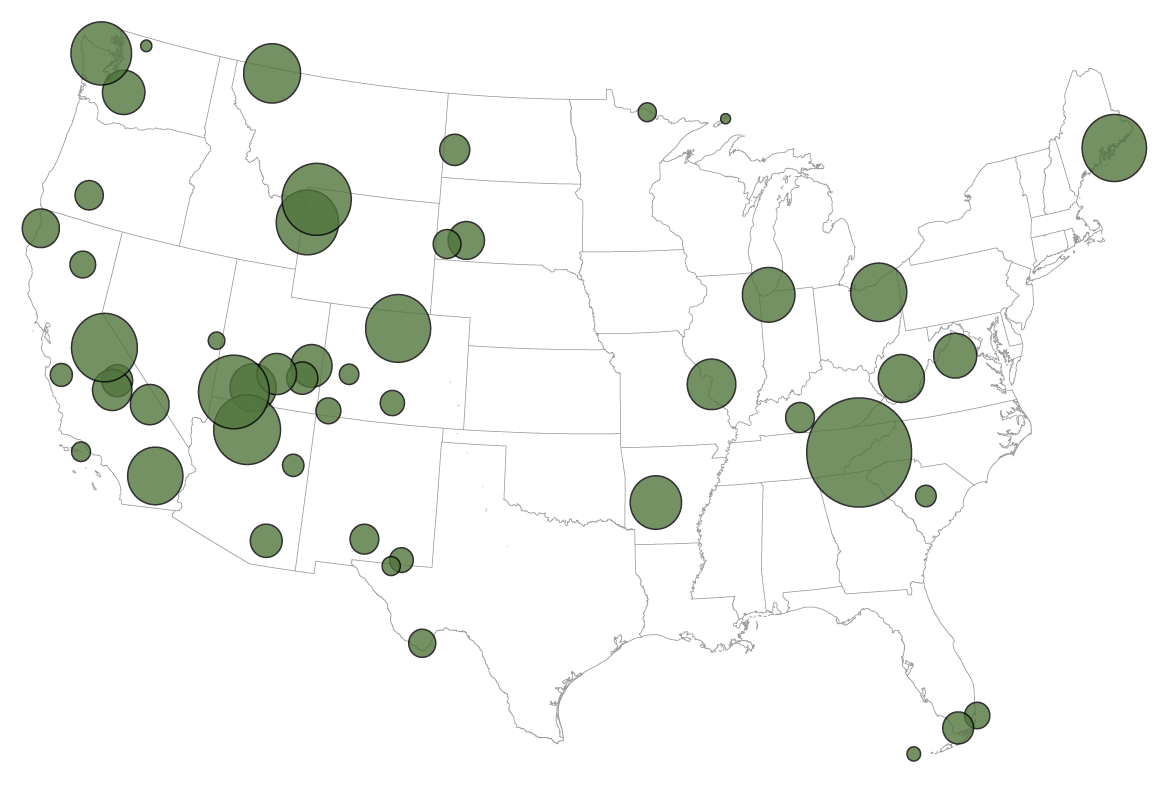
The U.S. National Parks have been a fixture of American life for over a century. From gawking at the Grand Canyon to admiring the endless green peaks of the Smokies to spotting Bison in Yellowstone and sea turtles in Biscayne, hundreds of millions of visitors journey to these parks each year. In some regards, the parks are more popular than ever, with a record 331.9 million recreational visits in 2025 and an estimated 85% of Americans having visited at least one park. But it is less immediately obvious how trends in visiting these parks have changed over time. Which parks have historically been the most popular? In what ways are people engaging with these parks and is this consistent across parks?
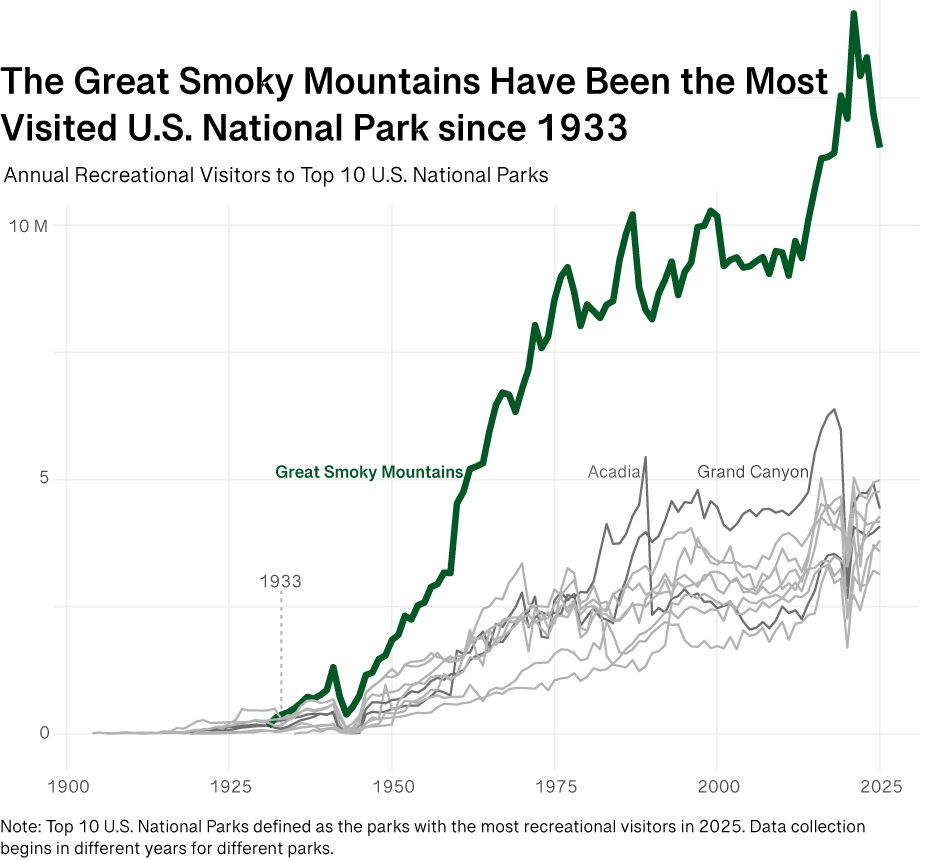
Looking into park popularity across time, the Great Smoky Mountains have had the most recreational visitors of any park since 1933. The Smokies weren’t officially made a national park until 1934, revealing a popularity that predates their official national park designation. Yet the Smokies didn’t come to dominate national parks visits until the 1950s, coinciding with the automobile becoming a ubiquitous presence in American households. According to the National Parks Service, the Great Smoky Mountains lie within a day’s drive of over half of the U.S. population, leading to them eclipsing any other park in number of annual visitors. Although the Smoky Mountains have had more than twice the visitors of other parks in recent years, these top ten parks all follow a similar trend of steadily rising popularity over the past several decades.
Great Smoky Mountains National Park
The increase in visits to parks has brought along a barrage of complaints about overcrowding: traffic on park roads, trails too packed to walk on, and fears of environmental harm. At the same time, just a few miles hike into these parks, crowds often seem to disappear. While record numbers of people are visiting national parks, they aren’t necessarily venturing deep into the parks or camping overnight.
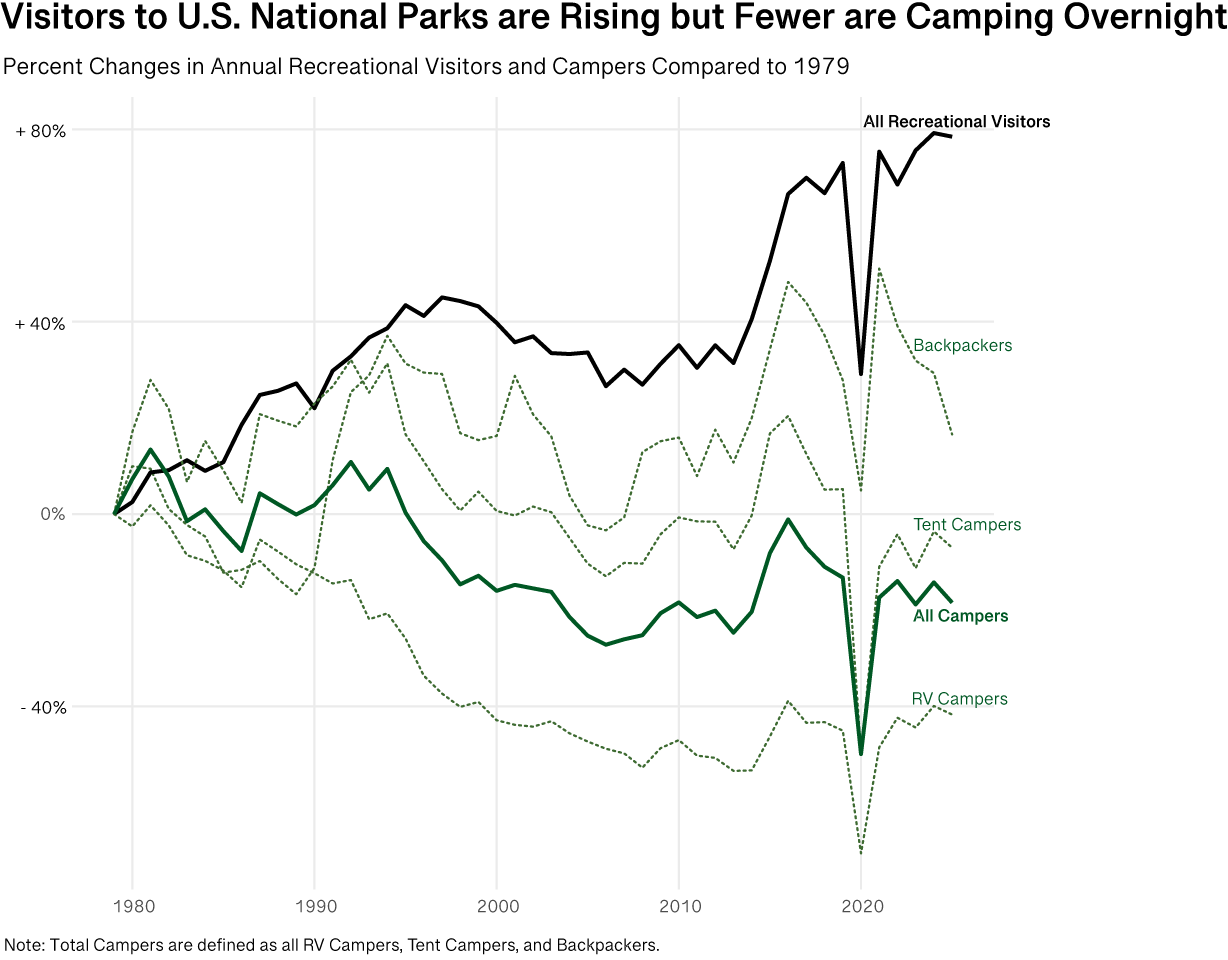
The National Park Service has recorded data on types of overnight visitors to parks since 1979. Total visitors to national parks are undoubtedly on the rise, with a nearly 80% increase in visitors in 2025 as compared to 1979. Yet, camping is in decline, down 18% in 2025 compared to 1979. The popularity of RV Camping has declined even more, down by almost half in 2025. Pitching a tent at a designated frontcountry campsite has only declined slightly, and backcountry camping has actually increased significantly. Therefore, enjoyment of national parks is perhaps being pushed to two extremes: more intense backcountry overnight experiences on one end and day trips on the other. It is possible that the increasing ease and affordability of other forms of travel combined with increasing reliance on technology, are pushing people away from certain forms of camping that were once popular in National Parks. However, the concurrent rise in backcountry camping complicates this narrative of an American departure from the outdoors. In fact, maybe a desire to escape from increasingly pervasive technology, coupled with the growing accessibility of information on how to backpack afforded by that very technology, have motivated this growing popularity of backpacking since the 1990s.
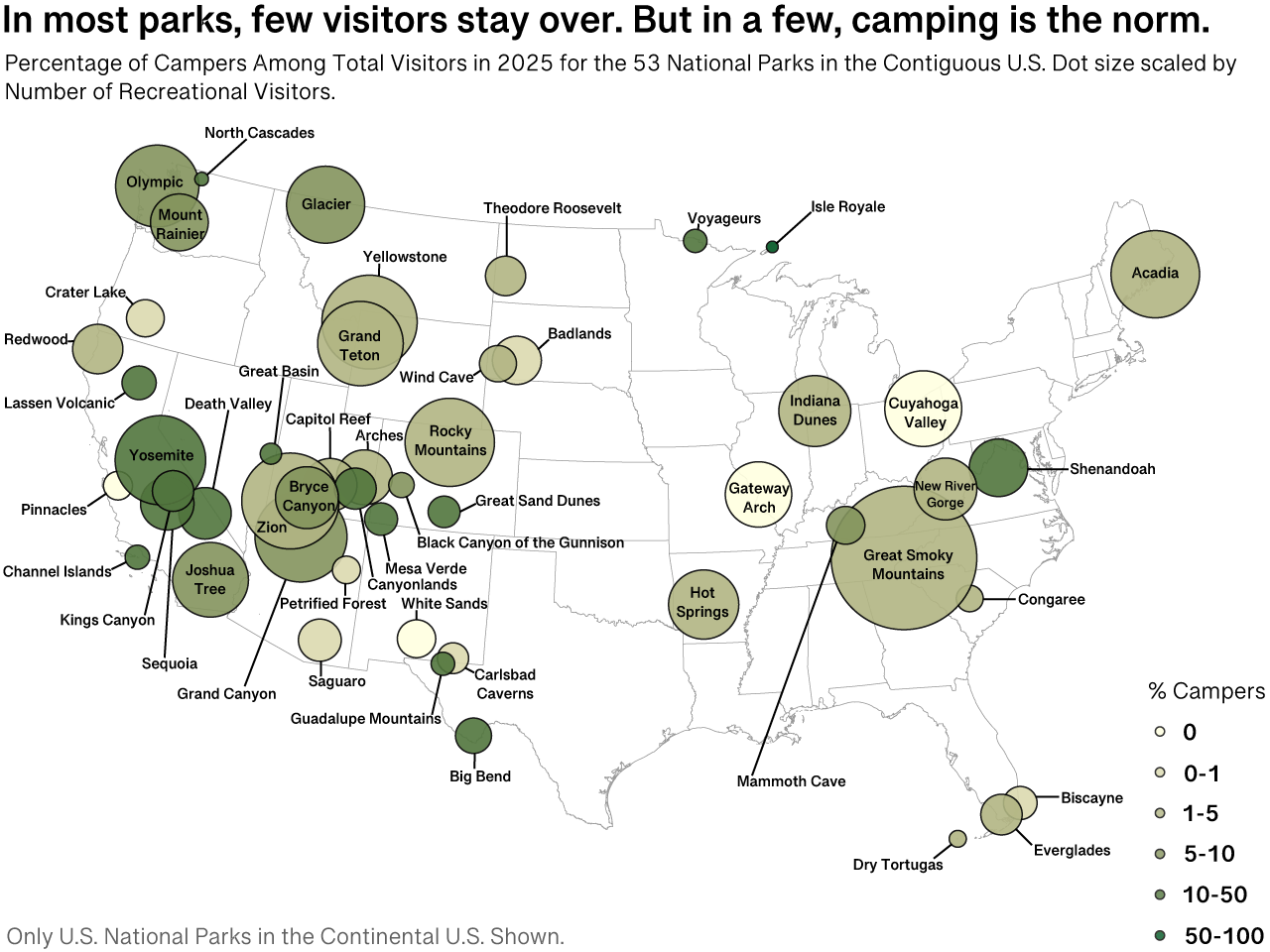
Although overnight visitors to national parks have been decreasing overall, this trend is not consistent across every park. While only around 3% of visitors to the Smokies, Zion, and Yellowstone camp overnight, the majority of visitors to other parks, such as Lake Clark and Isle Royale National Parks, are camping. These parks with higher proportions of campers tend to be in more remote locations and have significantly fewer overall visitors. Parks near the U.S. borders, such as North Cascades, Voyageurs, and Isle Royale near Canada or Big Bend and the Guadalupe Mountains near Mexico, tend to have smaller numbers of overall visitors and much higher proportions of campers. Locations that are further off the beaten path are naturally less popular, but those who do reach them are either required to camp due to the remoteness or more disposed to camp given their inclinations to seek out these far flung destinations in the first place.
Overall, national parks are more popular than ever, even if more visitors are opting for day trips rather than pitching a tent or staying in an RV. While other forms of camping are in decline, backpacking remains popular, particularly in less visited parks. National Parks have touched the lives of numerous Americans in various ways for over a century and seem poised to continue to do so for many years to come.
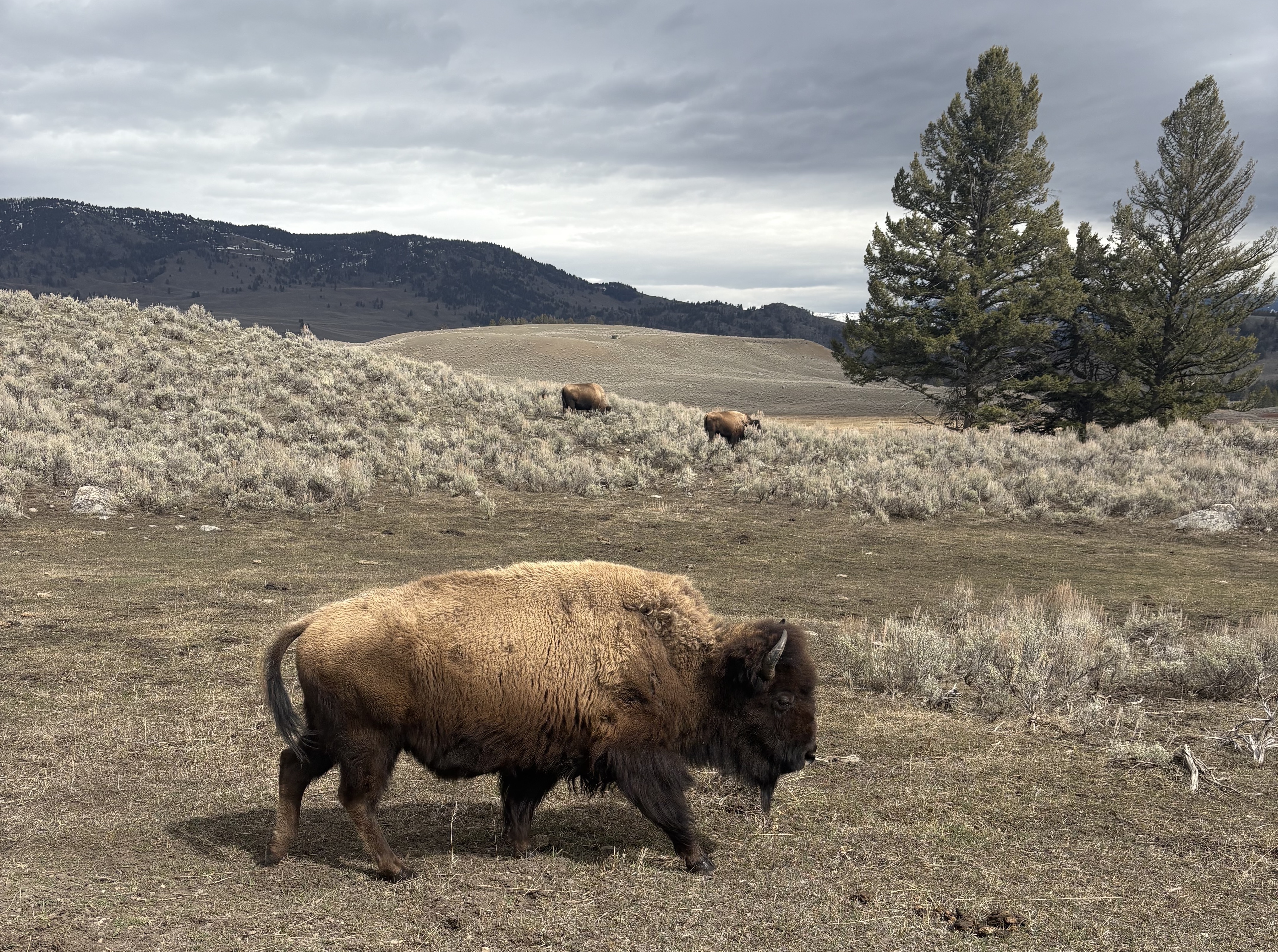
Yellowstone National Park
This website was designed for the course DATA 1500 at Brown University, taught by Professor Reuben Fischer-Baum. This data comes from the Annual Summary Report of the National Park Service Visitor Use Statistics, published annually by the U.S. National Park Service. You can access it here.